

Equally Education & Apprenticeship
Your ISHP
Diploma in Homeopathic Practice
The Inspire School of Homeopathic Practice is founded and directed by Wren Lloyd and provides training for homeopaths ... with a special focus on solid self knowledge & sustainable, effective practice. The ISHP Diploma in Homeopathic Practice will start accepting students September 2027 and is offering a hybrid education and apprenticeship ... a track toward not just learning to practice homeopathy ... but graduating WITH an active homeopathic practice & additional 3 Principles Practitioner Training. One of the biggest hidden problems in homeopathy education is that students are often taught as if they already have a practice waiting for them. As an ISHP Diploma student you will build one to graduate into.
Most graduates of homeopathic trainings are told only about 5% of them will go on to build a practice!
At ISHP you graduate WITH a homeopathic practice, increasing the odds by nearly 100%! That means the clients in the world who need you get seen!
Wren Lloyd, ISHP
The Course
The ISHP Diploma in Homeopathic Practice
Find out what's different about the ISHP Diploma:
- Innovative, contextual learning.
- A community that is small and personal, but strongly networked in the wider, homeopathic community.
- You will learn homeopathy, including complex case-taking.
- Plenty of clinic hours [live and recorded].
- Weekly clinic opportunities in our Riojen Outreach clinic in The Gambia, via zoom, meeting and working with many volunteer homeopaths and the Gambian clinic staff [from 3rd term of year 1].
- You'll also learn marketing & mindset skills and you'll build & manage a practice without burnout, laying the foundations in year 1, and practicing in your own practice under supervision by year 3.
- During this course, you will actually build a practice that can sustain you financially in future ... and partially in your 3rd year!
- You'll also graduate with a small practice group of peers for continued support, and remain in the ISHP community as an alumni.
- Many opportunities to collaborate and present your work.
- An additional 3 Principles Practitioner Training that will empower you in your life & work and enable you to offer this to your clients too.
Get the logistics
Remote study and/or face-to-face [Staffordshire UK].
See fees & payment plans
This diploma offers more and costs a bit more than an average training.
Frequently Asked Questions
Here are some more details.
What does the diploma cost?
The cost per year [3 years] is £5600 per year. The currency is GBP.
I will be making payment plans available as follows: Initial payment £2000, then 6 x monthly payments of £600.
The same payment plan is offered for Year 2 and Year 3 as long as payments have been made promptly previously.
Talk to me if you fall into hardship.
Books in the first year will cost approximately £400 GBP. Prices of the books might vary in other countries, but I'm choosing to work from a set reading list that is readily available.
What is the attendance required?
The course is a 3 year diploma.
You'll attend [in person, live on zoom or recorded] 10 weekends a year starting from 19-20th September 2026.
The weekend is usually the 3rd weekend of the month for first years.
The weekends are 10-5pm London time Saturday and Sunday.
We holiday July and August [no weekend study those months] to allow for vacations and school holidays.
Homework assignments will be set, so please reserve 6-10 hours per week minimum for study and related activities.
We have a beautiful, online student forum where you can access recordings of the weekend teachings, homework tasks, support and conversation.
If you want extension study, Wren will be more than happy to set you more learning activities! The course expands to your appetite. We also work smart rather than just hard ... so you won't be wasting any time and the learning will be contextual, interesting and tailored to ways you like to learn and present your learning.
Can I study in person or online? How about if I'm in a different time zone?
In person: If you are in the UK, or choose to make the journey, you can study in person at my farm / retreat centre in the Staffordshire Moorlands, UK.
Address: Rock House Farm, Ipstones Edge, Ipstones, Staffordshire, ST10 2LR, UK.
Online: live via zoom. You'll be fully included alongside those who are studying face-to-face ... except during lunch breaks!
Recorded: If studying in person is not possible and your time zone doesn't allow you to attend live, you can attend via recordings. We will also have a fully active forum, so you won't miss out on interaction.
You can also do a hybrid of all of the above!
What is special about the Diploma in Homeopathic Practice from ISHP?
The Diploma in Homeopathic Practice is designed to have you in practice by the time you graduate. Most homeopathic trainings have a very few lectures on building your practice. the ISHP Diploma has more of an apprenticeship structure.
Indeed, when you graduate you will have been part of a small practice support group [7 students] for the whole of year 3 of your Diploma. Homeopaths often find their work isolating, but Wren has been in and built practice groups and teams since before she graduated, and will encourage you to build a mutually supportive group that you can continue with on graduation.
You'll also have access to the student forum as a graduate! You're welcome to nurture students who are coming through the training and lean into support within the forum after graduation. You'll also still have access to all the teaching materials, and new materials that we add. You'll have optional access to post graduate courses Wren offers.
Wren teaches you homeopathic practice building right from the start of year 1, by encouraging you to start talking about what you are learning, helping you to build a social media presence and setting you homework in forms that can be repurposed for practice building. We work smart not hard!
By the end of year 3 you will have built an email list of interested, potential clients. You will have been seeing clients under supervision and you have the option to charge your clients for your work [if you are allowed to by law in the state / country you are working from.]
You'll also be confidently presenting, vlogging and blogging. You'll be writing newsletters, articles, and short courses to sell. You'll be able to podcast about homeopathy! And you'll have learned all these skills just by completing your homework in these forms, rather than as dry essays.
The Diploma includes Practitioner Training in 3 Principles ... why?
3 Principles Practitioner training is embedded in the Diploma from the start, so you graduate as a 3 Principles Practitioner as well.
The 3 Principles of Wellbeing is a work introduced by Sydney Banks which will help you gain confidence in yourself as a practitioner and help you build your practice by making being visible so much more comfortable.
3 Principles training can give us an ability to see our clients clearly by helping us to see what's our thinking and our judgments.
This enables you to step into your practice with a level of compassion, faith in the client's ability to heal, and boundaries that enable you to not burn out whilst serving others.
Self-acceptance mindset work is so important for homeopathic practitioners because we can be inclined to project what we don't accept about ourselves onto others ... our clients. Then we are not able to see our clients clearly, or hold them and their delicate disclosures faithfully.
This is powerful, transformational work for us personally, bringing more joy and restfulness to our lives and relationships.
Homeopathic training has a history of challenging our relationships, in good part because of the energetic transformation we undergo ourselves.
3 Principles understanding can help us mediate the transformation with less strain on our family relationships as we adjust to being on different energetic levels to others who have not made the same leaps.
What kind of clinical experience can I expect?
We will take live cases during Sunday afternoons on our study weekends.
We will also use recorded cases taken by a wide variety of Wren's colleagues and team members so that you can experience the breadth of case taking styles.
We'll have a Diploma case taking structure to guide you, but you will be encouraged to grow into your own style by graduation, so that you graduate confident.
From the 3rd term of year 1 students can volunteer with the virtual Gambia clinic, as students working alongside seasoned homeopaths. This is a great opportunity to learn from a variety of practicing homeopaths who volunteer for the project.
During Year 2 and 3 you can continue to volunteer at the virtual Gambia clinic [clocking your volunteering hours as clinical hours]. We'll continue with live cases at weekends and with recorded cases to watch within the student forum.
In your 3rd year you will take 12 cases as part of a study into gaining specialist experience in an area of interest to you. This is part of your practice building work also. You will gain testimonials from this work that will stand you in good stead for practice building. You'll be taught to find these 12 cases [or more] during the first 2 years of the Diploma.
Is the Diploma accredited in my country?
Different countries regulate homeopathy in different ways. In some countries [the UK for example] homeopathy isn't regulated as such, but many insurers want to see proof of training or voluntary registration with one of the voluntary registration bodies. This is also the case in some US states ... whilst other US states require a medical license for homeopathic practitioners.
The Diploma from ISHP is new. We will be in candidacy/provisional review with a recognised accreditor in the UK [The CMA] before we start in September. I will work toward gaining accreditation in the USA and perhaps Canada, within states that allow homeopaths to work without medical licenses. Check your state as in the USA and Canada some states have stricter rules than others.
Feel free to reach out for assistance if you can't find the information you need. My aim is to gain accreditation across as many countries and states as possible. It's so important that we teach homeopaths to build practices as well as how to be homeopaths, and that is not so far on offer in most courses.
We provide robust professional homeopathic education. Graduates are responsible for complying with local laws, certification requirements, and insurance requirements in their jurisdiction.
What about learning tech?
Tech can be daunting for some, but Wren will walk you through automating all the tech for your practice [bookings, invoicing, zoom, social media, websites, etc] ... step - by - step. You'll collaborate with fellow students on helping each other with marketing and you'll join up your efforts so that the whole process becomes familiar, fearless and efficient ... leaving you to do the wonderful job of healing your clients!
What kind of assignments are part of the training and how will we build our practice in this international setting?
We will offer a wide range of assignment types in order that the student can choose to study in a way that suits their learning style. Each of the assignments will be designed to be useful for communicating with potential clients. You'll be encouraged to start 'presenting' your knowledge in simple ways ... such as making your knowledge into a set of images for an Instagram carousel post, writing a short article, creating a drawing or diagram, making an audio recording, a video recording or a full presentation. Students can stretch to the level of ability they have and also stretch themselves further, depending on the amount of time they have.
We'll avoid 'exam' like assessment and keep assessment part of the learning process rather than a box ticking exercise. We won't be 'teaching to the exam'.
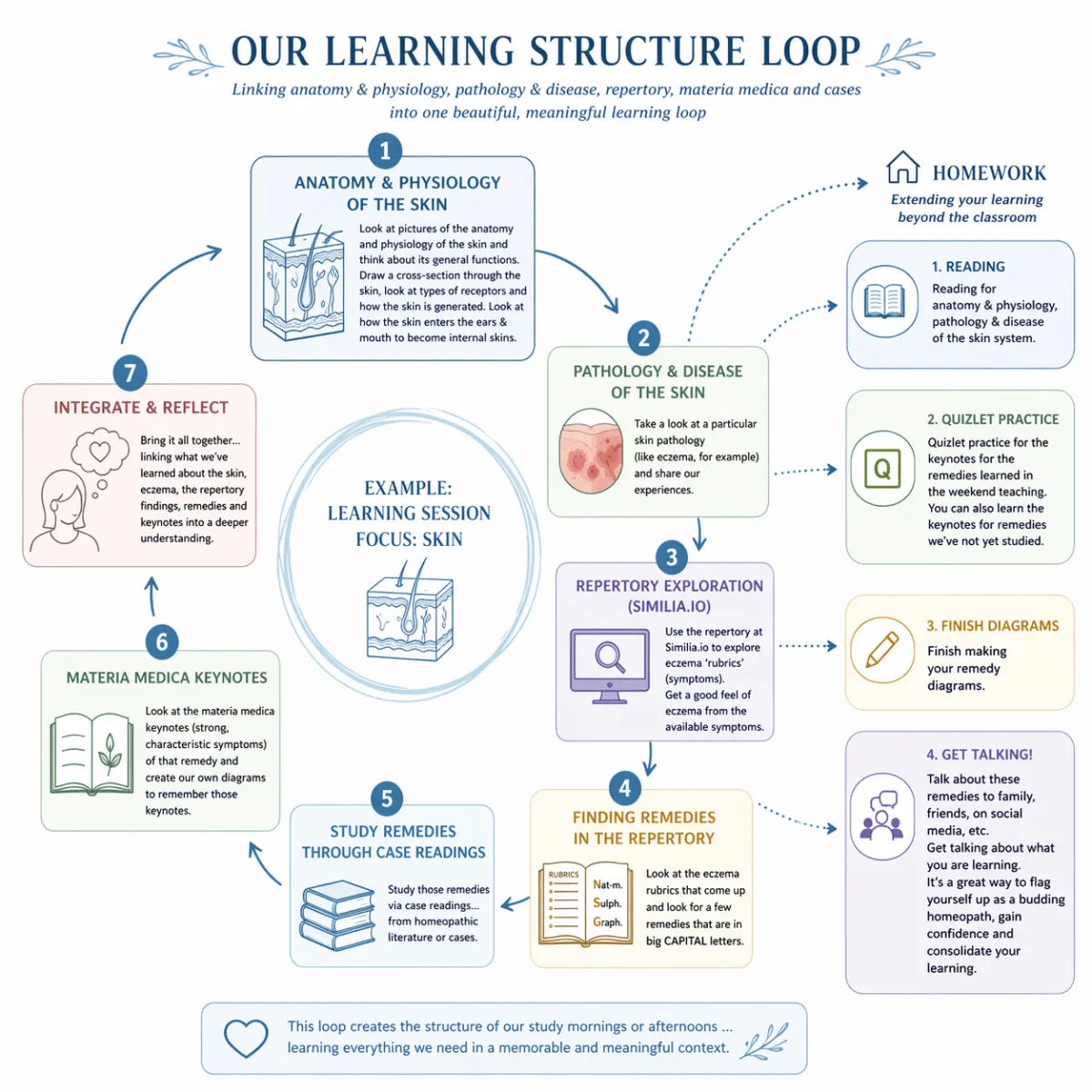
We will also have access to interactive cases in Similia, plus materia medica memorisation games / tools. These are self-scoring and allow you to rework areas of weakness. All Diploma passes are passed, without hierarchical grading. It's not going to be like school. <3
Most homeopaths now work internationally, since internet is international and they are communicating with potential clients around the world. However, you can as easily build a practice in your local area and you won't be required to build on social media if that is not your chosen way to build. There are many ways, and all will be supported in the training.
Will we be learning about homeopathic detox in the course? I'm interested in many types of homeopathy and wondered if you would be discouraging types other than classical.
A classical foundational training is a highly stabilising training to have. Predominantly, this will be the backbone of your learning. However, Wren and the other teachers work with a full toolbox of homeopathic methodologies and none will be discouraged. Homeopathic Detox will come up many times during the training but isn't a clear focus in the training. You can access Wren's training on this [for homeopaths, students and interested users] here: https://wrenlloyd.com/super-users-guide-homeopathic-detox
For those who are not able to attend the weekend sessions, will all the course material be accessible in other ways?
The weekends will be taught in person in Staffordshire [depending on a minimum of people being able to come in person], taught simultaneously live on zoom ... and all sessions will be recorded.
You can come in person, via zoom, or watch the recording ... or a combination of all.
There will be opportunities for interaction throughout the month in the forum also. Outside of the teaching weekends, we'll have live zoom sessions at different times of day to ensure you can come to some of them live, wherever you are in the world.
Realise your infinite potential
Don't just learn ... Practice!
Get to know
Wren Lloyd
Wren graduated from The International Academy of Classical Homeopathy [George Vithoukas] 2016 with a diploma in classical homeopathy, subsequently broadening her knowledge and teaching base to a wide homeopathic toolbox, including homeopathic detox and much more.
Wren has specialised in deep, chronic casework and has been running and training her team, International Homeopaths for Autism, for 5 years. She has a reputation for unsticking 'stuck' cases, of which she has seen many.
Wren has taught, presented and/or mentored in courses at The Academy of Integrative Homeopathy, Centre For Homeopathic Education, Academy of Transformative Homeopathy [The Helsinki School], and many more.
Wren has taught Homeopathic Practice Building for 10 years, seeing many of her students and team members go on to create vibrant practices and services, such as Homeopathy247.
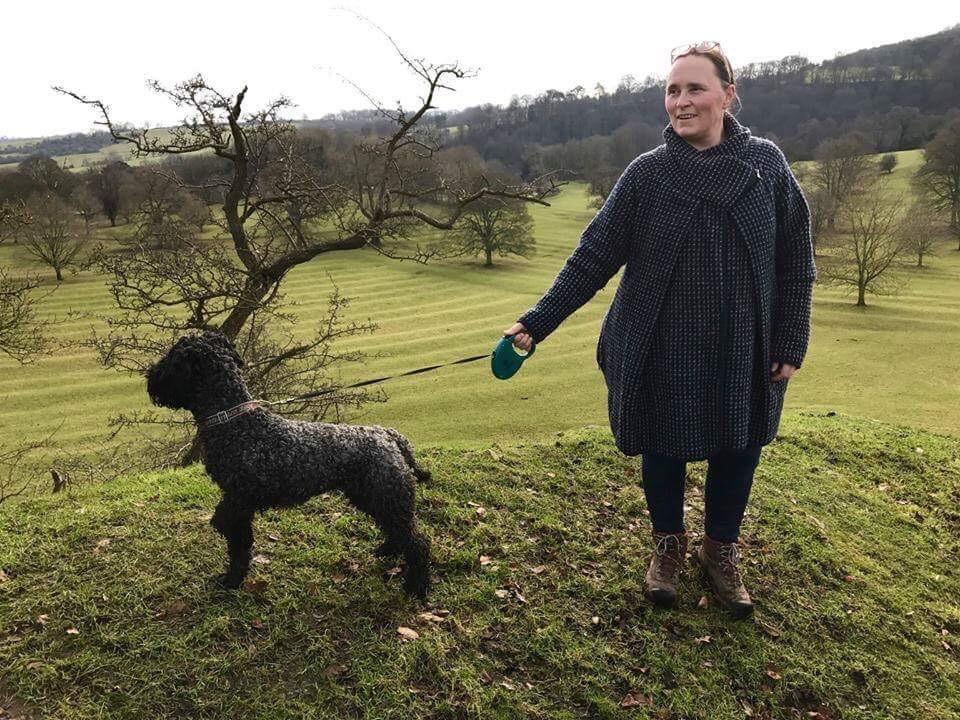
Wren also runs complex casework and homeopathic practice building memberships - memberships that will be available to ISHP Dip students.
Wren has also worked alongside Sameena Khan to set up the tech and nurture / coordinate 100+ volunteer homeopaths and homeopathy students for Sameena's Riojen Outreach Gambia Clinic.
As you can see, this breadth of knowledge and experience makes Wren a great director for your ISHP Diploma studies.
Ready to build the practice of your dreams?
One with a clear path? One where you practice as a homeopath without feeling lost and burnt out? One where you have a viable career?
Listen to the Podcast
Wren talks about how The ISHP Diploma in Homeopathic Practice promises something different ... ISHP fills the gaps other homeopathy diplomas have traditionally left in the areas of mindset and marketing know-how.
Most graduates of homeopathic trainings are told only 1 - 5% of them will go on to build a practice!
At ISHP you graduate WITH a homeopathic practice, increasing the odds by nearly 100%! That means the clients in the world who need you get seen!
Courses at ISHP
Our flagship course is The ISHP Diploma in Homeopathic Practice [which also incorporates 3 Principles Practitioner Training] ... We also have offerings for post graduates and we signpost to the PIHAP acute trainings that might precede a full diploma training.
Read the Blog
Read Wren's thoughts and news about ISHP and the ISHP Diploma ... plus news about homeopathy, study, clinics and other opportunities.
Are you ready to practice what you learn?
Ready to build the life of your dreams?

Let's chat
Ready to work with a coach to uplevel your life and business?
Listen to the
Podcast
view my
services
read the
BLOG
Let's chat
Ready to work with a coach to uplevel your life and business?

Let's learn
Learn at your own pace and make quantum leaps.
Student Love Notes
We've helped so many incredible students to find success as Virtual Assistants...

The VA Business Blueprint helped me to go from feeling completely stuck to starting my business and getting my first client!
Ellen, business name
I enrolled in the VA Services Academy feeling completely lost - within 2 weeks I knew exactly what to offer & what to charge.
Ellen, business name

Beginner to Booked Out was a game-changer for me. Anna and her team are incredible and I'm booked out for the next 3 months!
Ellen, business name
New on the blog...
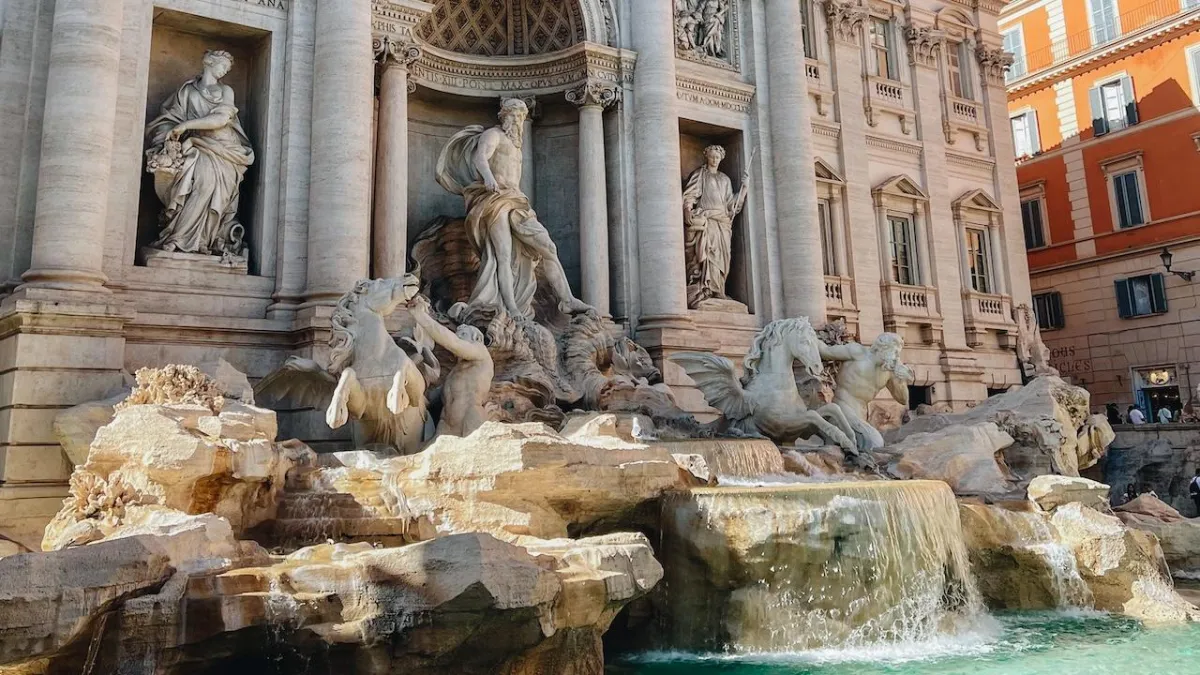
How to Plan the Perfect Weekend Getaway
Not every trip needs weeks of planning or a long-haul flight.
Some of the best travel memories come from quick, spontaneous weekend escapes — a couple of days away from routine, exploring somewhere new, and returning home feeling completely refreshed.
The secret to a great weekend getaway isn’t packing more into the trip. It’s choosing the right destination, keeping plans simple, and leaving room for a little spontaneity.
✨ Start With the Right Destination
✨ Choose One or Two Highlights
✨ Slow Mornings Are Part of the Plan
✨Make the Journey Part of the Experience
Start With the Right Destination
For a short trip, travel time matters.
The ideal weekend destination should be easy to reach, whether that’s a scenic train journey, a short drive, or a quick flight. The less time you spend travelling, the more time you have to actually relax, explore, and enjoy your surroundings.
Coastal towns, countryside villages, and vibrant cities can all make fantastic mini break destinations depending on the kind of escape you’re craving. The key is choosing somewhere that gives you the experience you want without requiring too much planning or complicated logistics.
When choosing your destination, keep these tips in mind:
Look for locations within a 2–3 hour travel window. This helps you maximise your time away rather than spending half your trip in transit.
Choose somewhere easy to navigate. Walkable towns, compact cities, or destinations with simple public transport make exploring much more enjoyable.
Think about the type of experience you want. Do you want a relaxing countryside retreat, a coastal escape, or a city full of restaurants, culture, and shopping?
Prioritise destinations with multiple nearby things to do. Cafés, scenic walks, local markets, museums, or viewpoints can make your trip feel full without needing to travel far.
Check the weather and seasonal highlights. Festivals, markets, or seasonal scenery can make a mini break feel even more special.
Choose somewhere that feels different from your everyday environment. Even a nearby destination can feel like a true getaway if it offers a new atmosphere or scenery.
With the right destination, even a two-day trip can feel refreshing, memorable, and surprisingly rejuvenating.
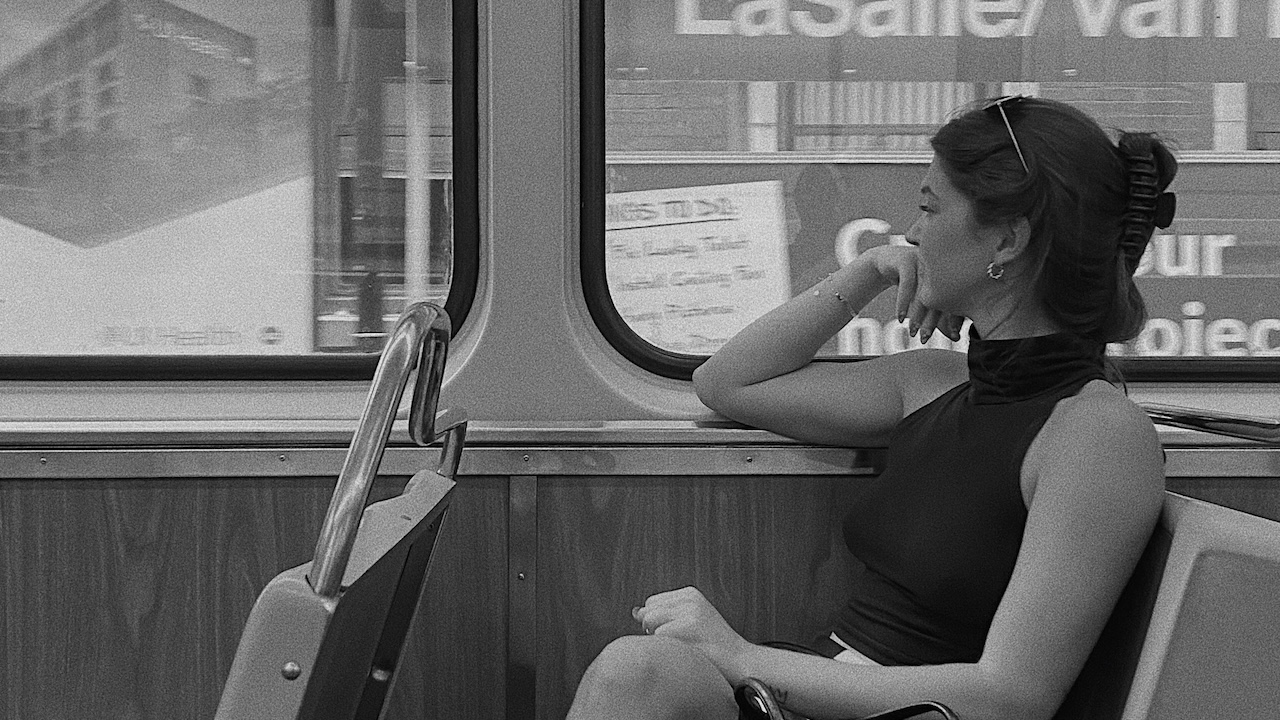
Choose One or Two Highlights
When you only have a couple of days away, it can be tempting to fill your itinerary with as many activities as possible. But trying to see and do everything often turns a relaxing mini break into a rushed checklist.
A better approach is to choose one or two experiences you’re genuinely excited about and build the rest of your trip around them. These highlights become the anchor points of your getaway, giving your trip structure while still leaving room for spontaneity.
Your highlights might be something simple and enjoyable, such as a restaurant you've been wanting to try, a scenic coastal walk, a museum visit, or a local market. When you focus on just a few meaningful experiences, the entire trip feels more relaxed and intentional.
Here are a few ideas to help you choose your highlights:
Pick one memorable activity for each day of your trip, such as a hike, sightseeing spot, or special experience.
Research local restaurants or cafés in advance so you can enjoy a meal you’re genuinely excited about.
Look for unique local experiences, such as food markets, historic landmarks, or scenic viewpoints.
Consider seasonal activities like festivals, farmers' markets, or outdoor events happening while you visit.
Choose experiences that reflect the vibe of the destination, whether that’s relaxation, adventure, culture, or food.
Leave space in your schedule so you can explore unexpected discoveries like charming streets, small shops, or hidden cafés.
Remember, the goal of a mini break isn't to see everything. It's to slow down, enjoy the moment, and create a few memorable experiences that make the trip feel special.
Focusing on just a couple of highlights often leads to a more enjoyable and relaxing getaway overall.

Slow Mornings Are Part of the Plan
One of the best parts of a weekend getaway is the slower pace.
When everyday life is busy, a mini break is the perfect opportunity to step away from strict schedules and give yourself permission to slow down. Instead of waking up early to rush from one activity to the next, allow your mornings to unfold naturally.
Imagine waking up without an alarm, opening the curtains to a new view, and starting your day with a relaxed breakfast rather than a packed to-do list. These slower moments help you settle into the destination and truly enjoy the experience of being away.
Often, the most memorable parts of a trip happen during these unplanned moments. A quiet café you discover while wandering, a scenic viewpoint you stumble upon, or a charming local shop can easily become the highlight of your entire weekend.
To make the most of slow mornings on your mini break, try:
Starting your day without an alarm whenever possible so you can wake up naturally and feel rested.
Planning a relaxed breakfast or coffee stop at a local café rather than grabbing something quickly on the go.
Taking a morning walk to explore the neighbourhood before it gets busy.
Leaving space in your itinerary so you don’t feel pressure to rush through activities.
Enjoying the atmosphere of your surroundings, whether that’s watching the ocean, strolling through quiet streets, or sitting in a sunny plaza.
Capturing the small moments, like journaling, taking photos, or simply pausing to appreciate where you are.
Slow mornings create a completely different rhythm for your trip. They give you time to be present, enjoy your surroundings, and ease into the day without stress.
Sometimes, those quiet, simple moments are exactly what make a mini break feel truly special.
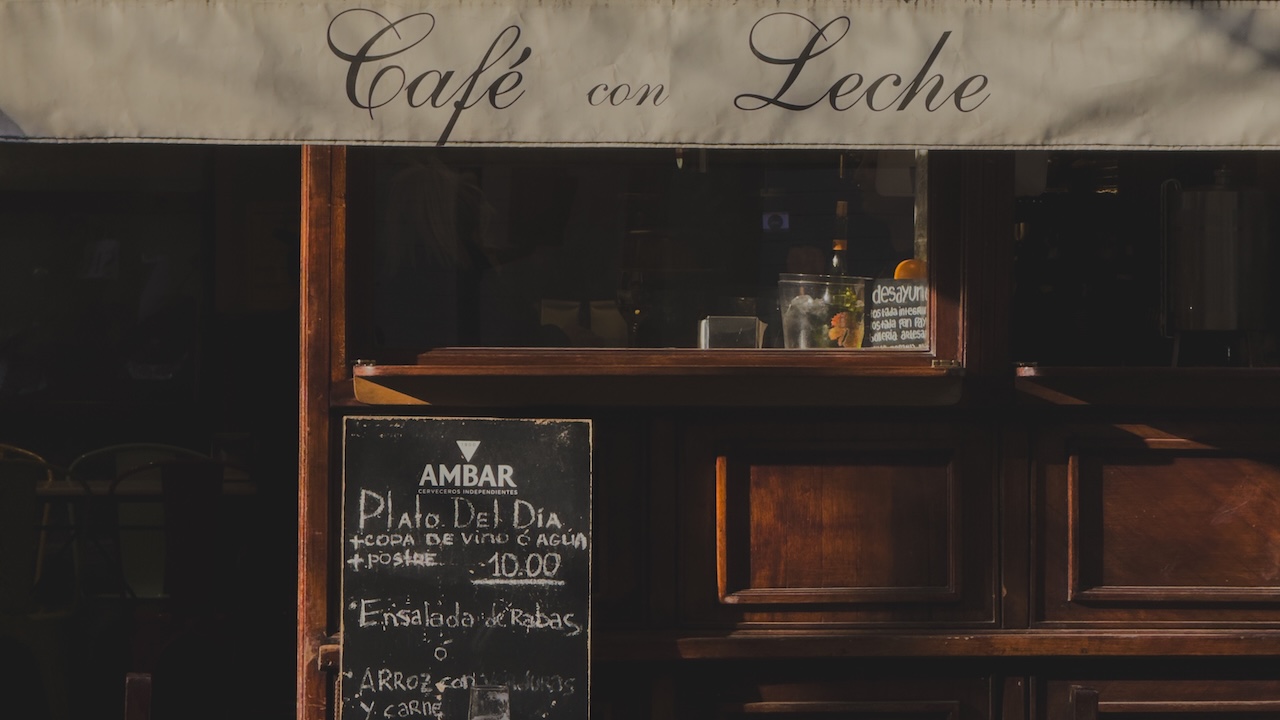
Pack for Simplicity
Packing light makes short trips so much easier.
When you’re only away for a couple of days, you really don’t need a full suitcase of options. In fact, the more you pack, the more time you often spend digging through your bag, deciding what to wear, or carrying unnecessary weight from place to place.
Instead, focus on bringing a small selection of versatile items that work well together. A few outfits you already feel comfortable in, a pair of shoes you can walk in all day, and your essential toiletries are usually more than enough for a weekend getaway.
Packing simply not only saves space, but it also removes decision fatigue while you're away. When your bag is organised and easy to manage, you can spend less time worrying about what you packed and more time enjoying your destination.
Here are a few ways to keep your packing simple and stress-free:
• Choose outfits that can be mixed and matched so a few pieces create multiple looks.
• Stick to a neutral colour palette so everything pairs easily together.
• Bring only one or two pairs of shoes, ideally one comfortable pair for walking and one optional pair for evenings.
• Use travel-sized toiletries or refillable containers to save space in your bag.
• Pack items that serve multiple purposes, like a light jacket that works for both day and evening.
• Use packing cubes or small organisers to keep everything tidy and easy to find.
• Avoid packing “just in case” items that you’re unlikely to use during a short trip.
The goal is to pack with intention rather than packing for every possible scenario. When you travel lighter, moving between places becomes easier, your luggage stays organised, and your trip feels far more relaxed.
Sometimes the simplest bag leads to the most enjoyable getaway.
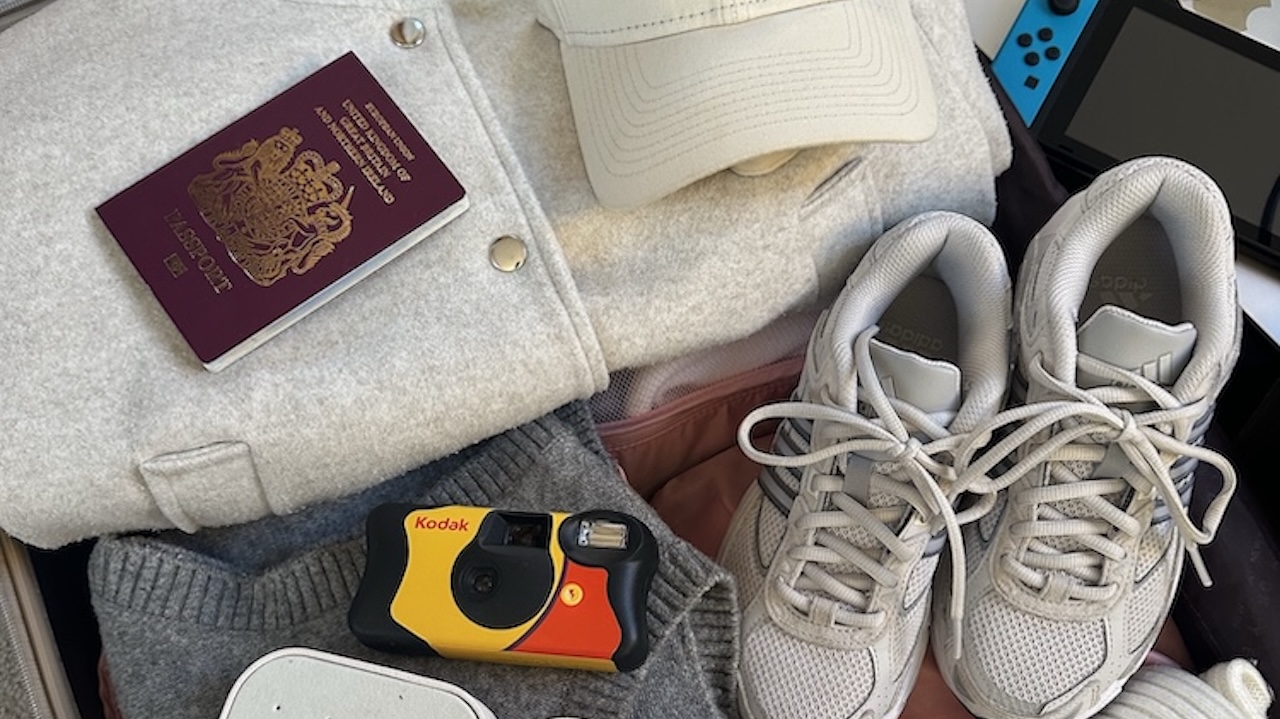
Make the Journey Part of the Experience
Weekend travel can feel surprisingly luxurious when you treat the journey itself as part of the adventure rather than just the time it takes to get somewhere.
Instead of rushing through the travel portion of your trip, try to embrace it as the beginning of your getaway. Whether you're travelling by train, car, or plane, the journey can be a chance to slow down, relax, and mentally transition away from your everyday routine.
There’s something special about watching new landscapes pass by, noticing how the scenery gradually changes, and feeling that sense of anticipation as you get closer to your destination. When you approach travel this way, the experience starts long before you arrive.
A few simple touches can make the journey feel more enjoyable and intentional:
• Bring a good book or magazine to enjoy during the journey.
• Download a podcast or audiobook that you’ve been meaning to listen to.
• Create a travel playlist to set the mood for your trip.
• Pack a few snacks or a favourite drink to make the journey more comfortable.
• Take time to notice the scenery, whether it’s rolling countryside, coastal views, or passing towns.
• Use the travel time to unwind, reflect, or plan the experiences you're excited about during your trip.
• Capture the start of your trip with photos or notes, documenting the journey as part of the story.
Often, the journey is what helps you shift into “holiday mode.” It creates a clear break from everyday life and allows you to arrive at your destination already feeling more relaxed and present.
When you slow down and enjoy the travel experience itself, the entire trip feels longer, richer, and more memorable.
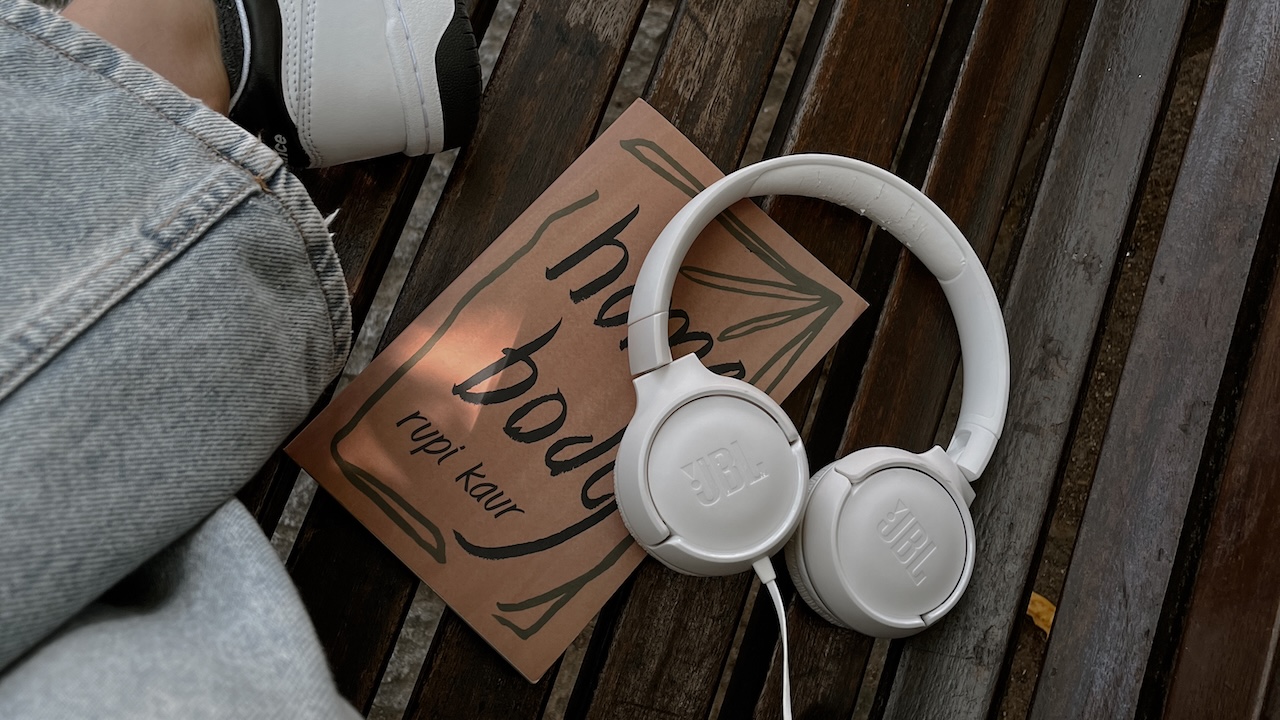
Common Mistakes to Avoid
Packing Too Many Shoes
Shoes take up a lot of space. For a mini break, you usually only need two pairs: one comfortable pair and one optional dressier pair.
Bringing Full-Size Toiletries
Travel-sized products or refillable bottles save space and weight in your bag.
Packing Clothes You Don’t Normally Wear
Trips are not the best time to experiment with uncomfortable clothing. Pack pieces you already know you love wearing.
Tools, Resources, and Helpful Packing Tips
Here are a few tools that make packing light even easier:
Packing Cubes
Great for organising clothing and maximising suitcase space.
Digital Packing Lists
Apps like PackPoint can generate a packing list based on your destination and trip length.
Carry-On Travel Bags
Choosing the right bag can naturally limit how much you pack and make travelling easier.
FAQ
How many outfits should I pack for a weekend trip?
For a 2–3 day trip, 2–3 outfits plus a comfortable travel outfit are usually enough.
Can I pack everything in a carry-on?
Yes! Most mini breaks only require a small suitcase or travel bag if you pack strategically.
What is the best bag for a mini break?
A small carry-on suitcase or travel backpack works perfectly for short trips.
Should I pack extra clothes just in case?
Try to avoid it. Stick to planned outfits and versatile pieces instead.
How do I keep my suitcase organised?
Packing cubes and small travel pouches help keep everything neat and easy to find.
The beauty of weekend getaways is their accessibility.
You don’t need months of planning or a huge itinerary. Just a destination that excites you, a small bag, and a couple of days to explore.
Sometimes the shortest trips are the ones that stay with you the longest.
Bon voyage!
Evelyn Smith xxx

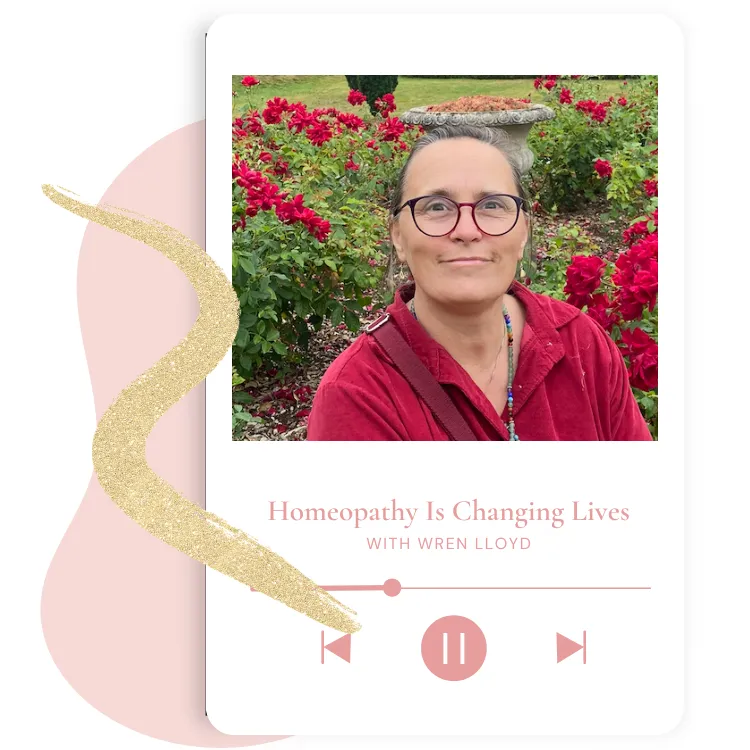
Homeopathy Is Changing Lives Podcast
A great place to hear from some of the most dynamic homeopaths about the pivotal moments of in their lives and careers. Wisdom, training, and entertainment for your listening moments ...
LISTEN ON: